Sunday, September 13, 2009

The Qajars, The Shah, and the Constitutional Revolution


Constitutional Revolution


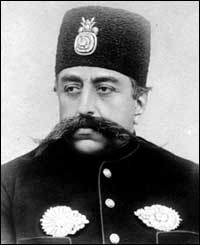
During the early 1900s the only way to save country from government corruption and foreign manipulation was to make a written code of laws. This sentiment caused the Constitutional Revolution. There had been a series of ongoing covert and overt activities against Naser o-Din Shah’s despotic rule, for which many had lost their lives. The efforts of freedom fighters finally bore fruit during the reign of Moazaferedin Shah. Mozafaredin shah ascended to throne on June 1896. In the wake of the relentless efforts of freedom fighters, Mozafar o-Din Shah of Qajar dynasty was forced to issue the decree for the constitution and the creation of an elected parliament (the Majlis) in August 5, 1906. The royal power limited and a parliamentary system established. 
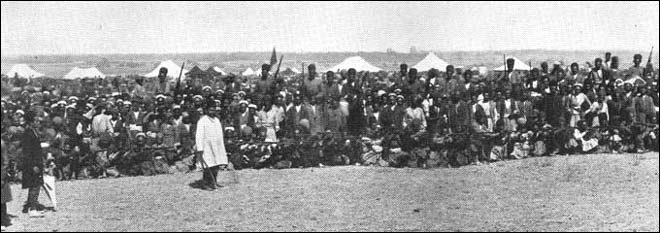
Bakhtiari Revolutionaries in camp outside Esfahan (June 1909)
In front, in a white coat with a sword, is Mohammad Ebrahim Khan, Zabet of Julfa.

On August 18, 1906, the first Legislative assembly (called as Supreme National Assembly), was formed in the Military Academy to make the preparations for the opening of the first Term of the National Consultative Assembly and drafting the election law thereof. During this meeting, Prime Minister Moshirul Doleh delivered a speech as the head of the cabinet. The session concluded with the address made by Malek Al Motokalemin. 

On October 7th, 1906 in a speech made in spite of his poor health, Mozaferedin Shah inaugurated the first session of the National Consultative Assembly. At this time the session was formed in the absence of representatives from provinces. 

Following Mozafaredin Shah’s death, his successor, Mohammad Ali Mirza who was then ruled Tabriz as a crown prince, ascended to the throne on January 21st, 1907. Before taking the reign, he pledged to respect the fundaments of Constitution and Nation’s Rights. But he contravened this from the very beginning which made Constitutionalists to react. 

Capitalizing on the internal struggles, both Russia and Britain entered a pact to settle their own differences; effectively dividing Iran into two areas of influence for their respected countries. This made headlines in early September 1907 and united the various factions in Iran. The Iranian government was officially notified of this pact on September 7, 1907 by Russian and British Ambassadors. 

The rising tides of dissatisfaction and discontent caused Mohammad Mirza to summon the cabinet members on December 17, 1907 under the false pretense of soliciting advice. He immediately orders their detention. Only Nasserul Molk, who was the prime minister, was let free. 

On December 22, 1907 a new cabinet was formed headed by Nezamul Saltaneh Mafi. On the surface the air is cleared and the tensions are eased. But on February 1908, a bomb is thrown at Shah’s Coach, making him highly suspicious. On June 1st, 1908 Shah purges some of the courtiers. Ambassador Zapolski of Russia and Ambassador Marling of Britain warn the Iranian Government to submit to Shah’s intents. 

Freedom Fighters of Tabriz
The two men in the center are Sattar Khan & Bagher Khan.
Two days later, Shah invites the leaders of the constitutional movement to the Imperial Gardens outside Tehran. There he imprisons all save for one who manages to escape. On June 24, 1908, Shah places Majlis under siege and orders its bombardment by artillery fire. 

During these times, the Tabriz uprising culminated and within the span of four months spread to Rasht, Qazvin, Esfahan, Lar, Shiraz, Hamadan,Mashhad, Astar-Abad, Bandar Abbas andBushehr. The Freedom fighters prevailed against the tyranny at all points. Yet Tabriz was still under economic and military blocked set up by government forces. 

On February 17, 1909, Freedom Forces captured Rasht. By March, they succeed in taking control of Rasht and Qazvin main roads. By April 22nd, 1909, Tabriz Freedom Fighters under the leadership of Sattar Khan(Sardar-e Meli) made their attack to break through the blockade. They lost huge number of their fighters. An English Reporter named Moore and an American Missionary called Howard Baskerville, who were sympathetic with the freedom fighters were killed. 

Commanded by General Yeprim and Brigadier Mohi, freedom fighters of Rasht occupied Qazvin and advanced towards Tehran. 

On June 22, 1909, Bakhtiari Chieftains, led by Samsam-ul-Saltaneh and Haj Aligholi Khan Bakhtiari (Sardar As’ad) reached the city of Qum, which they took over on July 8th,1909. The intimidations and interventions made by Russian and British embassies failed to stop the advance of freedom fighters. Inevitably, a number of Russian troops were dispatched to Gilan via Badkobeh, reaching Qazvin on July 12th, 1909. Russians warned Gilan Fighters to stop moving in against Tehran. 
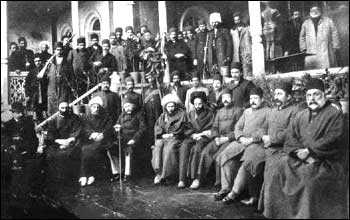
A nationalist council at Rasht
Ignoring the warning, Gilan freedom fighters advanced towards Tehran, and met up with Bakhtiari forces near Karaj (60km west of Tehran). Using the element of surprise, these forces moved through the lines of the government forces. Thus the 3000 strong, well-equipped forces led by Mohammad Valikhan Tonekaboni and Sardar As’ad, entered the capital amid welcoming cheers of freedom loving sympathizers. Following bloody fights in the streets and the Bazaar District, once again the national forces triumphed and the Cossack brigade, having retreated to the parade grounds, was surrounded and forced into surrender. 

On July 16, 1909, the capital was under complete control of freedom fighters. At 8:30, on the morning of July 17, 1909, Mohammad shah and a number of his supporters, under armed escort of Russian soldiers, took asylum with Russian Embassy in Zargandeh. 

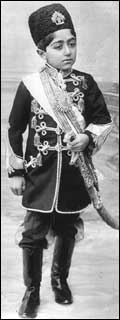
On this very day, the National Consultative Assembly (Majlis) held an emergency session and deposed Mohammad Ali Shah as a monarch, and named his 13 year old son, Ahmad Mirza as his successor. Azadulmolk was named as the Vice-Regent. 

On September 10th, 1909, Mohammad Ali Shah left the Russian Embassy and went into exile in Russia. 

First Term (October 7th, 1906 – June 23rd, 1908)
The most important task undertaken by the first Majlis was drafting and ratification of the Constitution on December 30th, 1906. It also set out the internal procedures. On October 17th, 1907 it drafted and ratified the constitutional amendments. 

The first Majlis was dissolved before the end of its Term due to Mohammad Ali Shah’s opposition against the Constitutionalists as well as foreign intrigues. Colonel Liakhov, the Russian commander of the Iranian Cossack brigade, along with several Russian officers set artillery fire against Majlis. A number of Majlis Representatives and Constitutionalists were detained in Bagh Shah, of which a number were killed. Some fled to and sought asylum with foreign embassies. Thus the First Majlis was dissolved and a martial law was declared. 

Second Term (November 15th, 1909 – December 24th, 1911)
The second Majlis came into session after a period of Interregnum that lasted almost 17 months. A two-stage, indirect plebiscite was carried out. Confronted with severe crises and dilemmas arising from interventions by foreign forces and domestic hardships, Majlis stood its ground as far as possible. Finally it was dissolved under foreign pressure. The representatives either fled or went into exile. 

Nevertheless important bills were passed during this time. These included the Public Tax Act, Bureau of Audit Act, the new election law, and the Education Bill. 

Third Term (December 6th, 1914 – December 14th, 1915)
The Third Majlis did not last more than a year. Faced with the First Word War, Majlis representatives declared Iran’s neutrality. Nevertheless, Iran’s neutrality was blatantly transgressed by foreign expeditionary forces. The Czarist Russian Army expeditionary force left Qazvin for Tehran, bringing up the question of relocating the capital. It raised concerns and led to riots. A number of representatives moved to Qum and from there to Kermanshah. Majlis session could not be held due to lack of quorum. It finally adjourned in November 12th, 1915. 

During this period, Majlis approved important laws such as the Military Conscription Act, Ministry of Finance constitution bill, and Real Estate tax law. 

Fourth Term (June 21st, 1921 – June 20th, 1923)
Following a long interregnum , that lasted five years and seven months), the Fourth Majlis was inaugurated. Most of its time had been spent in tension and rancor. 

The most valuable action taken was when it drafted and approved a bill submitted by Majlis majority leader Seyyed Hassan Modaress. The bill called for the abolition of the 1919 accord, signed between the Iranian Prime Minister and the British Government without Majlis knowledge. The accord had been put into effect before Majlis had any chance on debating it. 

Moddares’ bill, once approved, was announced publicly and the British government was formally notified. 

The most important legislations passed during this period had been: 
  • Friendship Pact between Iran and the Soviet Union.
  • The Scholarship Bill for sending 60 students outside the country.
  • Property, Real Estate and Document Registry Bill.


  • Fifth Term (February 11th, 1924 – February 11th, 1924)
    One of the tumultuous periods in Majlis, when a combination of generalissimo and foreign influence joined forces to put an end to the Qajar Dynasty. Independent Majlis representatives were harassed, intimidated and even assassinated in order to have the Minister of War, Reza Khan, installed to the throne. 

    Some of the important bills and legislations approved by Majlis during this period were: 
  • Ten year exemption of agricultural and industrial machinery from customs levies and excises.
  • Commercial Law.
  • The bill of Military draft conscription.
  • General Penal Law.


  • Sixth Term (July 10th, 1926 – August 13th, 1928)
    The most important event during this period had been the abolition of Capitulation on May 9th, 1927. 

    Some of the important bills and legislations approved by Majlis during this period were: 
  • Permission granted to the Minister of Justice to make organizational, judicial and employment reforms in the Ministry of Justice.
  • Permission granted for establishment of Iran National Bank.
  • Dispatch of student to outside of country.
  • Procedure for Trial and Prosecution of Ministers by Jury.


  • Seventh Term (October 6th, 1928 – November 5th, 1930)
    Majlis granted the right of issuing currency to the Iran National Bank (Bank Melli Iran). This task used to be carried out by Iran Royal Bank. 

    Among the important bills and legislations approved by Majlis during this period were: 
  • Prohibition of Slave trade within Iranian Territory by which any slave entering the country would be automatically emancipated.
  • Permission granted for formation of Agricultural Bank.


  • Eight Term (December 15th, 1930 – January 14th, 1933)
    During this period the Minister of Treasury proposed that Darcy License , which monopolized the Iranian oil fields, be cancelled. 

    The most important bills passed by Majlis at this time were: 
  • Granting the exclusive right of foreign trade to the government.
  • Permission granted to exchange protocols for the liquidation of Indo-European Telegraph in Iran.
  • Legal verdict confirming government decision to Terminate Darcy License.


  • Ninth Term (March 15th, 1933 – April 10th, 1935)
    The period saw negotiations with the British government over petroleum. It led to a new agreement. The Tehran University was inaugurated on February 4th, 1936. 

    Some of the most important legislations were: 
  • Granting of Petroleum License to Iran-o-British Petroleum Company in May 1934.
  • Permission granted for forming of Tehran University.


  • Tenth Term (June 6th, 1935– June 12th, 1937)
    The most important event during this period had been negotiations for the signing of non-aggression pact between Iran, Afghanistan, Turkey and Iraq. 

    The most important legislations ratified were: 
  • Formation of Iranian Government Railway Establishment.
  • Granting of petroleum license in parts of East and North-Eastern territories to Iran-American Oil Company.


  • Eleventh Term (September 11th, 1937 – September 18th, 1939)
    The Second World War conflagrated at this time. Iran proclaimed its neutrality in the conflict. 

    Among the important bills and legislations approved by Majlis during this period were: 
  • Formation of Ministry of Commerce.
  • Formation of Ministry of Industry.
  • Ratification of the non-aggression pact among Iran, Afghanistan, Turkey and Iraq (The Saad Abbad Pact).
  • Census Law.


  • Twelfth Term (October 25th, 1940– October 30th, 1941)
    Numerous social and economic problems arising from the Second World War gripped the country. While Iran had declared its neutrality, Soviet Union and Britain blatantly disregarded it and sent in their troops into Iran under the pretext of supposed Reich influence in Iran. 

    During an emergency session on September 17, 1941, Reza Shah abdicated in favor of his son, Mohammad Reza who was sworn in as the new monarch on the next day. Meanwhile with the Generalissimo Reza Khan out of the way, Majlis passed a bill of pardon and clemency for a number of political and general sentences. 

    Thirteenth Term (November 13th, 1941 – November 23rd, 1943)
    This period coincided with the Tehran Conference attended by the head of states of Britain, Soviet Union and United States, where the territorial integrity and political independence of Iran was guaranteed. 

    Important bills and legislations approved during this period were: 
  • Permission for exchange of concord with Soviet and British government.
  • Permission to employ Dr. Millipso, the General Director of Treasury and delineation of his scope of authority Formation of Ministry of Industry.
  • Amendments to Press Law.
  • Resolution to declare war against the German Reich.
  • Insurance security for government and private workers.

  • Taken from the Iran Chamber Society:
    http://www.iranchamber.com/history/constitutional_revolution/constitutional_revolution.php

    The Qajar Dynasty

    Qajar Dynasty


    Agha Mohammad Khan
    The Qajars were a Turkmen tribe that held ancestral lands in present-day Azerbaijan, which then was part of Iran. In 1779, following the death of Mohammad Karim Khan Zand, the Zand Dynasty ruler of southern Iran, Agha Mohammad Khan, a leader of the Qajar tribe, set out to reunify Iran. Agha Mohammad Khan defeated numerous rivals and brought all of Iran under his rule, establishing the Qajar dynasty. By 1794 he had eliminated all his rivals, including Lotf 'Ali Khan, the last of the Zand dynasty, and had reasserted Iranian sovereignty over the former Iranian territories in Georgia and the Caucasus. Agha Mohammad established his capital at Tehran, a village near the ruins of the ancient city of Ray (now Shahr-e Rey). In 1796 he was formally crowned as shah. Agha Mohammad was assassinated in 1797 and was succeeded by his nephew, Fath Ali Shah. 

    Fath Ali Shah, 1797 - 1834
    Under Fath Ali Shah, Iran went to war against Russia, which was expanding from the north into the Caucasus Mountains, an area of historic Iranian interest and influence. Iran suffered major military defeats during the war. Under the terms of the Treaty of Golestan in 1813, Iran recognized Russia's annexation of Georgia and ceded to Russia most of the north Caucasus region. A second war with Russia in the 1820s ended even more disastrously for Iran, which in 1828 was forced to sign the Treaty of Turkmanchai acknowledging Russian sovereignty over the entire area north of the Aras River (territory comprising present-day Armenia and Republic of Azerbaijan). 

    Fath Ali's reign saw increased diplomatic contacts with the West and the beginning of intense European diplomatic rivalries over Iran. His grandson Mohammad Shah, who fell under the influence of Russia and made two unsuccessful attempts to capture Herat, succeeded him in 1834. When Mohammad Shah died in 1848 the succession passed to his son Naser-e-Din, who proved to be the ablest and most successful of the Qajar sovereigns. 

    Naser o-Din Shah
    Naser o-Din Shah, 1848 - 1896
    During Naser o-Din Shah's reign Western science, technology, and educational methods were introduced into Iran and the country's modernization was begun. Naser o-Din Shah tried to exploit the mutual distrust between Great Britain and Russia to preserve Iran's independence, but foreign interference and territorial encroachment increased under his rule. He contracted huge foreign loans to finance expensive personal trips to Europe. He was not able to prevent Britain and Russia from encroaching into regions of traditional Iranian influence. In 1856 Britain prevented Iran from reasserting control over Herat, which had been part of Iran in Safavid times but had been under non-Iranian rule since the mid-18th century. Britain supported the city's incorporation into Afghanistan; a country Britain helped create in order to extend eastward the buffer between its Indian territories and Russia's expanding empire. Britain also extended its control to other areas of the Persian Gulf during the 19th century. Meanwhile, by 1881 Russia had completed its conquest of present-day Turkmenistan and Uzbekistan, bringing Russia's frontier to Iran's northeastern borders and severing historic Iranian ties to the cities of Bukhara and Samarqand. Several trade concessions by the Iranian government put economic affairs largely under British control. By the late 19th century, many Iranians believed that their rulers were beholden to foreign interests. 

    Mirza Taghi Khan Amir Kabir, was the young prince Nasser o-Din's advisor and constable. With the death of Mohammad Shah in 1848, Mirza Taqi was largely responsible for ensuring the crown prince's succession to the throne. When Nasser o-Din succeeded to the throne, Amir Nezam was awarded the position of prime minister and the title of Amir Kabir, the Great Ruler. 

    Iran was virtually bankrupt, its central government was weak, and its provinces were almost autonomous. During the next two and a half years Amir Kabir initiated important reforms in virtually all sectors of society. Government expenditure was slashed, and a distinction was made between the privy and public purses. The instruments of central administration were overhauled, and the Amir Kabir assumed responsibility for all areas of the bureaucracy. Foreign interference in Iran's domestic affairs was curtailed, and foreign trade was encouraged. Public works such as the bazaar in Tehran were undertaken. Amir Kabir issued an edict banning ornate and excessively formal writing in government documents; the beginning of a modern Persian prose style dates from this time. 

    One of the greatest achievments of Amir Kabir was the building of Dar-ol-Fonoon, the first modern university in Iran. Dar-ol-Fonoon was established for training a new cadre of administrators and acquainting them with Western techniques. Amir Kabir ordered the school to be built on the edge of the city so it can be expanded as needed. He hired French and Russian instructors as well as Iranians to teach subjects as different as Language, Medicine, Law, Georgraphy, History, Economics, and Engeneering. Unfortunatelly, Amir Kabir did not live long enough to see his greatest monument completed, but it still stands in Tehran as a sign of a great man's ideas for the future of his country. 

    These reforms antagonized various notables who had been excluded from the government. They regarded the Amir Kabir as a social upstart and a threat to their interests, and they formed a coalition against him, in which the queen mother was active. She convinced the young shah that Amir Kabir wanted to usurp the throne. In October 1851 the shah dismissed him and exiled him to Kashan, where he was murdered on the shah's orders. 

    Mozaffar o-Din Shah
    The Constitutional Revolution
    When Naser o-Din Shah was assassinated by Mirza Reza Kermani in 1896, the crown passed to his son Mozaffar o-Din. Mozaffar o-Din Shah was a weak and ineffectual ruler. Royal extravagance and the absence of incoming revenues exacerbated financial problems. The shah quickly spent two large loans from Russia, partly on trips to Europe. Public anger fed on the shah's propensity for granting concessions to Europeans in return for generous payments to him and his officials. People began to demand a curb on royal authority and the establishment of the rule of law as their concern over foreign, and especially Russian, influence grew. 

    The shah's failure to respond to protests by the religious establishment, the merchants, and other classes led the merchants and clerical leaders in January 1906 to take sanctuary from probable arrest in mosques in Tehran and outside the capital. When the shah reneged on a promise to permit the establishment of a "house of justice", or consultative assembly, 10,000 people, led by the merchants, took sanctuary in June in the compound of the British legation in Tehran. In August the shah was forced to issue a decree promising a constitution. In October an elected assembly convened and drew up a constitution that provided for strict limitations on royal power, an elected parliament, or Majles, with wide powers to represent the people, and a government with a cabinet subject to confirmation by the Majles. The shah signed the constitution on December 30, 1906. He died five days later. The Supplementary Fundamental Laws approved in 1907 provided, within limits, for freedom of press, speech, and association, and for security of life and property. The Constitutional Revolution marked the end of the medieval period in Iran. The hopes for constitutional rule were not realized, however. 

    Mozaffar o-Din's son Mohammad Ali Shah (reigned 1907-09), with the aid of Russia, attempted to rescind the constitution and abolish parliamentary government. After several disputes with the members of the Majlis, in June 1908 he used his Russian-officered Persian Cossacks Brigade to bomb the Majlis building, arrest many of the deputies, and close down the assembly. Resistance to the shah, however, coalesced in Tabriz, Esfahan, Rasht, and elsewhere. In July 1909, constitutional forces marched from Rasht and Esfahan to Tehran, deposed the shah, and re-established the constitution. The ex-shah went into exile in Russia. 

    Ahmad Shah
    Although the constitutional forces had triumphed, they faced serious difficulties. The upheavals of the Constitutional Revolution and civil war had undermined stability and trade. In addition, the ex-shah, with Russian support, attempted to regain his throne, landing troops in July 1910. Most serious of all, the hope that the Constitutional Revolution would inaugurate a new era of independence from the great powers ended when, under the Anglo-Russian Agreement of 1907, Britain and Russia agreed to divide Iran into spheres of influence. The Russians were to enjoy exclusive right to pursue their interests in the northern sphere, the British in the south and east; both powers would be free to compete for economic and political advantage in a neutral sphere in the center. Matters came to a head when Morgan Shuster, a United States administrator hired as treasurer general by the Persian government to reform its finances, sought to collect taxes from powerful officials who were Russian protégés and to send members of the treasury gendarmerie, a tax department police force, into the Russian zone. When in December 1911 the Majles unanimously refused a Russian ultimatum demanding Shuster's dismissal, Russian troops, already in the country, moved to occupy the capital. To prevent this, on December 20 Bakhtiari chiefs and their troops surrounded the Majles building, forced acceptance of the Russian ultimatum, and shut down the assembly, once again suspending the constitution. There followed a period of government by Bakhtiari chiefs and other powerful notables. 

    Ahmad Shah, was born 21 January 1898 in Tabriz, who succeeded to the throne at age 11, proved to be pleasure loving, effete, and incompetent and was unable to preserve the integrity of Iran or the fate of his dynasty. The occupation of Iran during World War I (1914-18) by Russian, British, and Ottoman troops was a blow from which Ahmad Shah never effectively recovered. With a coup d'état in February 1921, Reza Khan (ruled as Reza Shah Pahlavi, 1925-41) became the preeminent political personality in Iran; Ahmad Shah was formally deposed by the Majles (national consultative assembly) in October 1925 while he was absent in Europe, and that assembly declared the rule of the Qajar dynasty to be terminated. Ahamd Shah died later on 21 February 1930 in Neuilly-sur-Seine, France. 

    Taken from the Iranian Chamber Society Website :http://www.iranchamber.com/history/constitutional_revolution/constitutional_revolution.php

    Tuesday, September 1, 2009

    Waitlisted Students

    So I spoke to the person in charge of class sizes. She's increased the class size by 10 for both the upper division and lower division sections and those of you on the wait-list should be moved in to the class by now. 

    Feel free to shoot me an email any hour of the day and I'll do my best to get back to you as soon as possible.

    Monday, August 31, 2009

    Welcome to the Class

    DeCal Course Syllabus – Iran: 30 Years of Revolution


    Course Description

    Iran 30 Years of Revolution serves as an introductory course on contemporary Iranian politics through examining the history of Iran over the past century and how events like the coup d’état against Dr. Mossadegh in 1953, and the near-decade long Iran-Iraq war have contributed to Iran’s current political atmosphere, both domestically and internationally. This course will also raise questions about issues that have brought Iran into the spotlight such as its nuclear program and the Shia’-Sunni divide.

    Social issues like women’s, religious and gender rights will be addressed through examining Iran’s political structure and domestic policies. This decal also examines Iran’s role as a Great Shia Power in the Middle East and its growing influence in regional politics in regards to things suchas the current Iraq war and the para-military political group Hezbollah in Lebanon. No background on Iran or the Middle East is needed.

    Documentaries, films, guest lecturers, and class discussions to convey and enhance the material will be utilized. The course will meet once a week for two hours.


    Course Facilitator

    Sammy Al-Shatti – s.alshatti@gmail.com

    Course Requirements


    Students will be required to attend every class meeting, submit a final paper, and respond to an online blog. With the use of power-point presentations, class will consist of organized units of lectures on topics of modern Iranian political history.


    Readings:

    The readings will be posted on the blog. Readings will be related to the lectures and will be posted after class.

    Blog Participation:

    Students will utilize the blog to post reading responses every other week. The blog will consist of reading related to the lectures in the form of news articles, videos, scholarly journals, as well as memoirs from major figures in Iranian political history. 

    Attendance:

    You are allowed two absences without any prior notice to the facilitator. Any other absences will require prior instructor approval.


    Grade Breakdown

    Final Paper – 50%

    Blog Participation/Response Paper – 25%

    Attendance – 25%


    NOTE: You must pass each portion of the class in order to receive a pass

    grade in the class.


    Course Schedule


    Week 1 –  Introduction to the Course.


    Week 2 – Qajar Dynasty, Constitutional Revolution and Reza Shah


    Week 3- The Coup against Prime Minister Mossadegh and CIA involvement


    Week 4- The Shah:  The White Revolution and SAVAK


    Week 5 - The Islamic Revolution: The Rise of Ayatollah Khomeini.


    Week 6- Development of Government Structure and the Iran-Iraq War


    Week 7 – Religious Atmosphere in Iran: Religious Minorities and the

    Sunni-Shia Divide.


    Week 8 - The Cyclical Social Struggle: The Rise of Reformists.


    Week 9– Persepolis


    Week 10- The Era of Ultra-Conservatives and President Ahmadinejad


    Week 11– Iran’s role in the Middle East: a new great power?


    Week 12– Iran and the International Community: the Nuclear Controversy.


    Week 13- The Green Revolution


    Week 14- Marmulak

    Monday, July 20, 2009

    Sunday, June 21, 2009

    For up to the minute updates about the protests in Iran:


    http://www.huffingtonpost.com/2009/06/13/iran-demonstrations-viole_n_215189.html

    http://iran.twazzup.com/?q=%23iranelection

    http://niacblog.wordpress.com/

    CNN has 24 hour coverage this weekend


    Saturday, June 13, 2009

    Protests Roil Tehran After Disputed Vote


    http://www.nytimes.com/2009/06/14/world/middleeast/14iran.html

    Protests Roil Tehran After Disputed Vote


    TEHRAN — The streets of Iran’s capital erupted in the most intense protests in a decade on Saturday, with riot police officers using batons and tear gas against opposition demonstrators who claimed that President Mahmoud Ahmadinejad had stolen the presidential election.

    Witnesses reported that at least one person had been shot dead in clashes with the police in Vanak Square in Tehran. Smoke from burning vehicles and tires hung over the city late Saturday.

    The Interior Ministry said Saturday afternoon that Mr. Ahmadinejad had won 62.6 percent of the vote, with Mir Hussein Moussavi, the top challenger, taking just under 34 percent. Turnout was a record 85 percent.

    Mr. Moussavi, a former prime minister who had promised to reverse Mr. Ahmadinejad’s hard-line policies, declared himself the winner by a wide margin Friday night, charged widespread election irregularities and called on Ayatollah Ali Khamenei, Iran’s supreme leader, to intervene.

    The landslide victory for Mr. Ahmadinejad, an intensely divisive figure here and abroad, came as a powerful shock to opposition supporters, who had cited polls showing that Mr. Moussavi had a strong lead in the final days of the campaign.

    Interior Minister Sadegh Mahsouli said Saturday that such a lead was a misimpression based on Mr. Moussavi’s higher levels of support in the capital, and that he had less backing elsewhere.

    Mr. Moussavi made clear in statements on Saturday that he rejected the results and called on supporters and fellow clerics to fight them. But there were no reports of any public appearances by him through the day, leading to rumors that he might have been arrested.

    In a statement posted on his campaign Web site, Mr. Moussavi said: “Today the people’s will has been faced with an amazing incident of lies, hypocrisy and fraud. I call on my Iranian compatriots to remain calm and patient.”

    But Ayatollah Khamenei closed the door to any appeals for intervention in a statement issued on state television on Saturday afternoon, congratulating Mr. Ahmadinejad on his victory and pointedly urging the other candidates to support him.

    In a televised address to the nation Saturday night, Mr. Ahmadinejad called on the public to respect the results, and he denounced foreign diplomatic and journalistic criticism.

    “All political and propaganda machines abroad and sections inside the country have been mobilized against the nation,” he said.

    Mr. Moussavi’s defiance seemed to fuel street resistance by his supporters — a coalition including women, young people, intellectuals and members of the moderate clerical establishment — who had united in opposition to Mr. Ahmadinejad’s erratic economic stewardship, confrontational foreign policy and crackdown on social freedoms.

    “Death to the coup d’état!” chanted a surging crowd of several thousand protesters, many of whom wore Mr. Moussavi’s signature bright green campaign colors, as they marched in central Tehran on Saturday afternoon. “Death to the dictator!”

    Farther down the street, clusters of young men hurled rocks at a phalanx of riot police officers, and the police used their batons to beat back protesters. There were reports of demonstrations in other major Iranian cities as well.

    The authorities closed universities in Tehran, blocked cellphone transmissions and access to Facebook and some other Web sites, and for a second day shut down text-messaging services.

    As night settled in, the streets in northern Tehran that recently had been the scene of pre-election euphoria were lit by the flames of trash fires and blocked by tipped trash bins and at least one charred bus. Young men ran through the streets throwing paving stones at shop windows, and the police pursued them.

    Earlier in the day, hurried meetings were reported among Iran’s leading political figures and clerics; some were said to be trying to influence Ayatollah Khamenei to intervene in a situation that could stain public confidence in the integrity of Iran’s elections.

    But Saeed Leylaz, an economist and political analyst, said he believed that Ayatollah Khamenei’s statement would bring a resolution, even if demonstrations persisted for a few days. “This has put an end to political negotiations from above,” Mr. Leylaz said.

    For the moment, Ayatollah Khamenei’s admonition did nothing to calm the opposition’s rage.

    “The results of the 10th presidential election are so ridiculous and so unbelievable that one cannot write or talk about it in a statement,” said Mehdi Karroubi, a reformist cleric and candidate.

    Mr. Karroubi came in last with 300,000 votes — far fewer than analysts had predicted. “It is amazing that the people’s vote has turned into an instrument for the government to stabilize itself,” he said.

    The other candidate, Mohsen Rezai, got 680,000 votes, Interior Ministry officials said.

    In 2005, when Mr. Karroubi was also a candidate for president, he accused the government of rigging the vote in Mr. Ahmadinejad’s favor. In that election, the government announced when polls closed that there would probably be a runoff between two of three candidates, a reform candidate and a former police chief.

    But by 7 a.m. the next day, a spokesman for the Guardian Council, a clerical oversight panel that is not supposed to be involved in vote counting, announced that Mr. Ahmadinejad was in first place. Mr. Karroubi’s charges were never investigated.

    The turmoil on Saturday followed an extraordinary night in which the Iranian state news agency announced that Mr. Ahmadinejad had won by a vast margin just two hours after the polls closed. The timing alone provoked deep suspicion here, because the authorities have never before announced election results until the following morning. Mr. Moussavi also announced Friday night that he believed he had won by a wide margin.

    Mr. Moussavi also complained about irregularities and unfairness in the election, saying there had been a lack of ballots in many areas and that some of his campaign offices had been attacked and his Web sites shut down.

    The official results prompted further skepticism, in part because Mr. Ahmadinejad was said to have won by large margins even in his opponents’ hometowns. Mr. Rezai’s hometown, for example, gave him less than a tenth of Mr. Ahmadinejad’s total there, the Interior Ministry said.

    The issue of vote-rigging has often been raised in Iranian elections, but analysts have generally said the authorities can manipulate the results by only a few percentage points, leaving room for genuine democratic movements.

    Iran’s clerical leaders often point to past reformist victories as proof of the Islamic Republic’s democratic legitimacy. Many reformists have boycotted votes in the past to avoid giving the clerics that satisfaction. Those reformists voted in large numbers this time, inspired by a vast popular movement that rose up to support Mr. Moussavi.

    Their bitterness on Saturday at the unexpected results was correspondingly severe.

    “We are not disposable things to be thrown away,” said Mahshid, 20, a student who declined to give her last name because she feared repercussions from the authorities. “From now on, we won’t vote. They have insulted our feelings of patriotism.”

    Meanwhile, the working-class areas of southern Tehran where Mr. Ahmadinejad is popular were largely quiet, despite rumors of wild victory celebrations.

    “There might be some manipulation in what the government has done,” said Maliheh Afrouz, 55, a supporter of Mr. Ahmadinejad clad in a black chador. “But the other side is exaggerating, making it seem worse than it really is.”